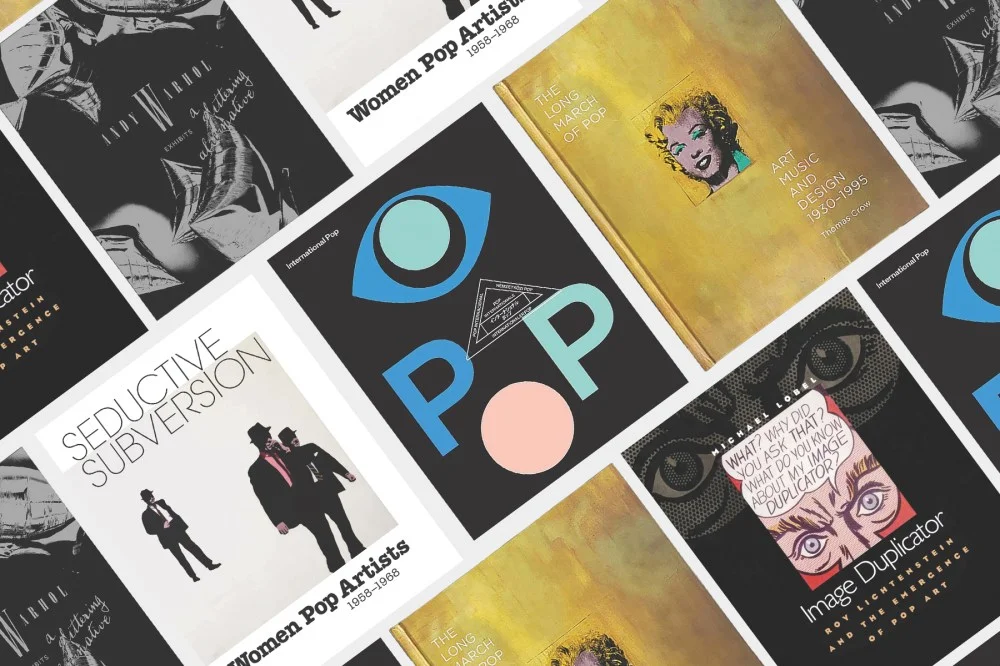
Reading Pop Beyond Its Familiar Icons
Pop art’s familiar images—comic panels, consumer goods and celebrity faces—can make the movement look more settled than it was. But those instantly recognizable motifs are only part of the story: they can obscure the arguments about authorship, technology and popular culture that shaped the work. These five books complicate the standard picture, tracing Pop’s postwar origins, its international reach and the artists and ideas a narrow canon left out. They offer timely context alongside the Whitney Museum of American Art’s retrospective on Roy Lichtenstein, whose work remains central to debates about what Pop borrowed from mass media and what it changed. If you’re working in this space, the books also offer a useful reminder that a familiar visual style doesn’t guarantee a settled history.
Origins and the Question of Who Counts
-
The Long March of Pop: Art, Music, and Design 1930–1995
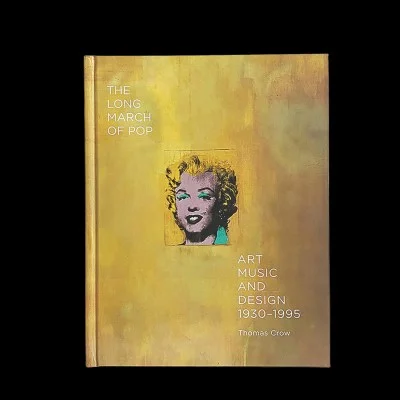
Thomas Crow’s account resists treating Pop as a clean break from what came before. He locates its artists in postwar classrooms shaped by an influx of veterans, where American folk imagery became part of the visual conversation. That emphasis matters: movements rarely begin with a single decisive rupture, and this account makes room for the conditions and references that artists carried into their work. Chapters on Robert Indiana, James Rosenquist and Robert Rauschenberg open onto a broader cultural history, from surfboards to Woody Guthrie songs. The result makes Pop’s source material feel expansive and distinctly American without reducing it to fine art alone. Here's the thing: putting art, music and design in the same frame helps explain why Pop’s imagery could feel familiar before it entered a gallery.
-
Seductive Subversion: Women Pop Artists 1958–1968
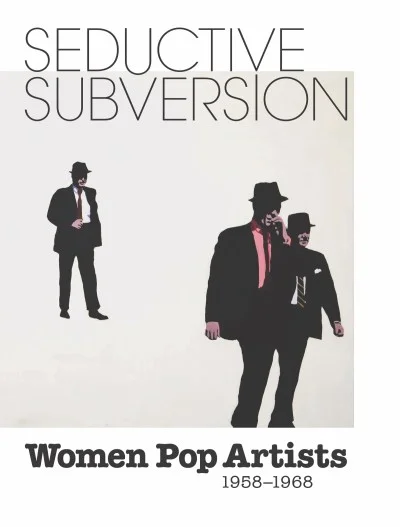
The movement’s standard history has too often centered men, leaving women who worked in its visual language at the margins. This catalog, published for a 2010 traveling exhibition, examines how sexism and racism shaped that exclusion. Its contribution isn’t simply to add overlooked names to an existing list; it asks how the list itself was assembled and whose work was treated as representative. It gives Pauline Boty, Faith Ringgold and Marjorie Strider overdue attention, while also making a case for artists such as Chryssa, Lee Lozano and Alina Szapocznikow. Their work is usually filed under other movements, a reminder that the boundaries of Pop art remain open to revision. That said, revising a canon takes more than recognition: it also means reconsidering the categories that made some artists harder to see.
-
International Pop
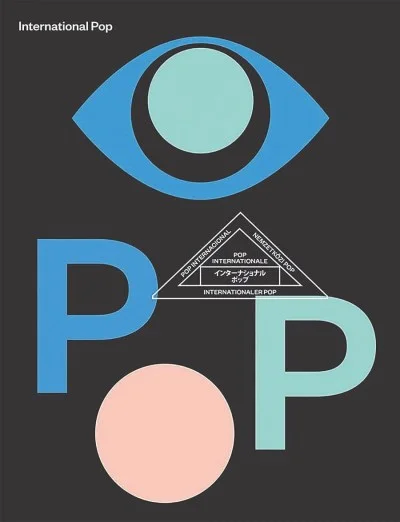
The images of consumer goods at the heart of Pop art also moved through an international market. This catalog from the Walker Art Center’s 2015 exhibition maps distinct Pop histories across the Americas, Asia and Europe, with essays and a detailed timeline. That breadth complicates the familiar idea that Pop was a US style simply exported elsewhere; artists working in different places could engage with popular imagery while responding to distinct local conditions. The book also asks how the movement developed alongside American economic power, a question that keeps its account of consumer culture tied to politics and exchange. The range of artists makes it a useful challenge to accounts that treat Pop as a US export; its design is a further draw. A wider frame doesn’t resolve every question of influence, but it makes the questions harder to avoid.
-
Image Duplicator: Roy Lichtenstein and the Emergence of Pop Art
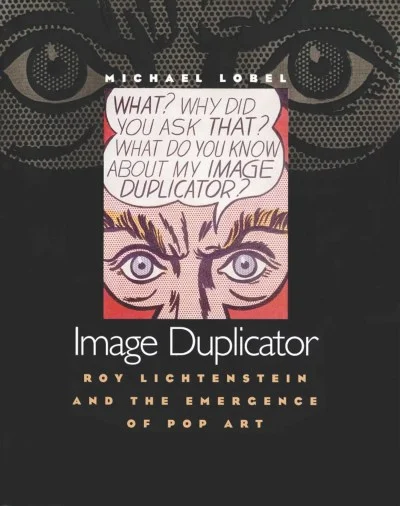
Michael Lobel’s 2002 study links Lichtenstein’s work to a shift away from gestural painting and toward imagery and techniques associated with print advertising. That shift raises questions about the artist’s role and how technology shapes the images people see. Reproducing an image can look mechanical, but the choice of what to copy, how to alter it and where to display it still involves judgment. One revealing episode comes from Lichtenstein’s training at Ohio State University: in its “flash lab,” students drew images that were projected in a dark room for one-tenth of a second. The exercise treated the body as a kind of recording device, offering a striking clue to the ideas behind Pop’s mechanical look. This is more significant than it looks: the book connects a visual effect to a larger question about how images are perceived and remade. A small technical detail, with larger implications.
-
Andy Warhol Exhibits: A Glittering Alternative
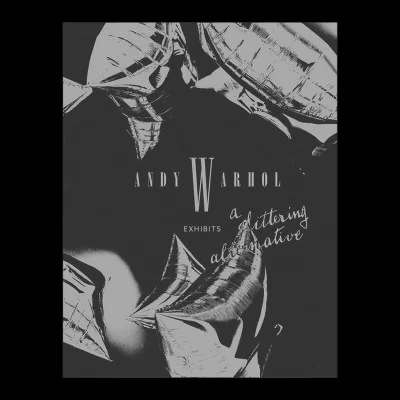
Pop’s relationship with retail extended beyond subject matter to the way art was displayed. Department store windows and marketing displays helped shape exhibition choices, from wallpapered rooms to stacks of Brillo boxes. This publication accompanied a 2020 Vienna exhibition devoted to Warhol’s installations, and its archival photographs document that theatrical approach. The photographs are valuable because installation is difficult to reduce to a single image: arrangement, repetition and the surrounding room all shape what a visitor encounters. Jennifer Sichel’s final essay offers a fresh interpretation of Warhol’s ideas about homosexuality, drawing on newly discovered tapes of an early interview with critic Gene Swenson. It frames Pop as a space for queer desire as well as a response to consumer culture. Sichel also wrote Criticism Without Authority, about Swenson and queer critic Jill Johnston, published the previous year. The book’s attention to display broadens the question of what a Pop artwork is: an object, an image, or an experience arranged for an audience.
Pop Across Borders and Media
What These Books Change
Taken together, these books suggest that Pop’s lasting appeal comes partly from the friction between its accessible imagery and its more difficult history. The movement can be approached through national identity, gender and race, reproduction, retail display or queer desire; no single account settles how those threads fit together. (And this is the part most people overlook.) The familiar images may be easy to recognize, but their meaning depends on who made them, how they circulated and which institutions later decided what counted as Pop.
For readers encountering the Whitney retrospective, the books provide ways to look beyond Lichtenstein’s best-known visual language without pushing him out of the story. They put his work beside broader histories of popular culture and ask what gets lost when one artist or one national narrative stands in for an entire movement. The books don’t offer a single verdict, and that’s a strength: they make the canon look like an argument that can still be examined. What this means for you is simple: the next time a Pop image seems self-explanatory, look again at the context around it.