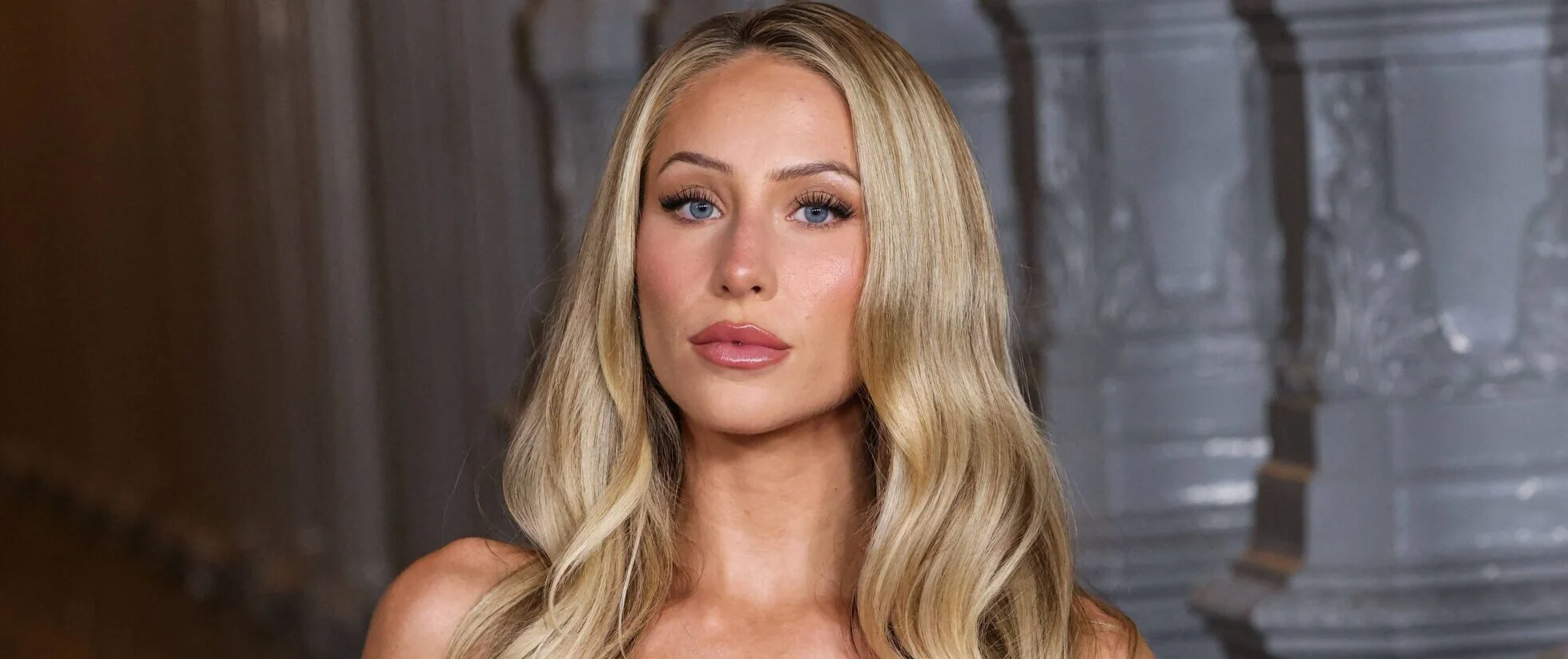
Alix Earle’s Halloween posts show how quickly a costume can become a conversation about an influencer’s public image. Her silver take on Alice, Natalie Portman’s character in the 2004 film Closer, drew more than 196,000 Instagram likes—and sharply divided commenters over whether the look felt playful or overly provocative. That split matters because the discussion moved beyond whether the costume worked: some followers treated it as a film reference, while others read it as a statement about Earle’s relationship with her audience.
The costume becomes a test of audience expectations
Earle’s costume paired a glittering silver bra and tiny matching bottoms with long white fringe, a short pink bob, dramatic eye makeup and glossy nude lipstick. In one photo, she tugged at the side of the bottoms while posing from behind; in others, raised arms let the fringe drape across her body. The styling made the reference immediately legible while placing the revealing silhouette at the center of the post.
Her caption, “Lying is the most fun a girl can have without taking her clothes off,” nodded to a memorable line from Closer. The reference landed with some fans: one called it “so niche” and said they loved the movie. Others objected to the styling and what they saw as a shift in Earle’s brand. “Love you but too thirsty for your brand tbh,” one commenter wrote. Another said, “This is not it. this is not why your OG followers started following you. sad.” A third added, “I think we lost the plot.”
That disagreement is part of the post’s story. A costume can work as a self-contained visual joke, but for a creator with an established following, viewers often judge it against the persona they believe they signed up to watch. The comments suggest some fans saw the look as a departure; they don’t establish that the audience as a whole feels that way. Still, the tension is clear: the same image can read as a playful reference to one viewer and as calculated provocation to another.
A second Halloween look takes a futuristic turn
Earle also posted a TikTok on October 31 wearing a metallic bodysuit inspired by Japanese artist Hajime Sorayama, known for futuristic robot designs. The glossy black suit featured gold detailing across the waist and torso, with straps around the thighs. She completed the look with an extra-long blonde ponytail and oversized bow, plus silver eye makeup and dramatic lashes. Compared with the Alice costume, this outfit leaned into a more overtly futuristic visual language, built around metallic surfaces and sharply defined details.
The video drew more than 252,000 likes. One viewer asked how she could use the bathroom in the restrictive outfit. Earle replied, “I can’t.” Another joked that the costume was “Perfect for a little bar in Jersey!” Those reactions focus less on the reference itself than on the practical absurdity of wearing the suit out. A small exchange like that gives followers an easy way into the post: they can respond to the look, but also to the everyday inconvenience it seems to create.
A costume that limits basic movement can become part of the performance. Here, Earle’s reply keeps the conversation light and personal, while the comments turn a highly styled outfit into a relatable problem. The joke does useful social work: it makes the post feel less like a polished fashion image and more like a moment followers can riff on.
Fashion posts extend beyond Halloween
The attention to Earle’s outfits extends beyond Halloween. In an October 19 TikTok, she modeled a fitted black minidress with long sleeves and a deep V-neckline that reached nearly to her waist. She wore her blonde hair in voluminous waves over one shoulder, with a delicate necklace and nude lipstick, as Tate McRae’s “Housewife” played in the background. The styling was less tied to a character than the Halloween looks, giving viewers a more direct fashion moment to assess.
That video passed 182,000 likes. Fans called for her to walk a runway and praised her hair color; her sister Ashtin commented, “You should wear this every day.” The responses were supportive, but they also show how fashion content can invite different kinds of audience participation: viewers can praise an individual detail, imagine a next step for the creator, or simply join a family member’s endorsement.
This is more significant than it looks. A creator’s feed can make an outfit function as entertainment, personal expression and a prompt for audience feedback at once. If you’re working in this space, the practical lesson is that followers may respond not just to what’s worn, but to whether the post feels consistent with the version of the creator they recognize.
Holiday collection gets a festive preview
Away from the costume posts, Earle used a late-October TikTok to preview holiday products from her Reale Actives skincare brand. Styled as a festive character in a short blonde wig with bangs, she wore a pale pink silk minidress with a plunging neckline and fluffy white wrist cuffs while sitting on a large red gift box. A second scene showed her in a fitted red outfit and black knee-high boots beside a trolley piled with pale green presents. The holiday setting gives the product preview a seasonal frame, while the costume-like styling carries forward the visual approach of her Halloween content.
The video, captioned “Meet the minis,” said the products would launch November 10 on the Reale Actives website and November 8 through the brand’s shopping app. It received more than 27,000 likes. Taken together, the posts place Earle’s fashion choices and product promotion in the same social feed, where followers respond to both the styling and what they think it says about her evolving public persona. That combination can make a feed feel coherent, but it also means commercial posts are interpreted alongside personal ones, whether the audience intends to evaluate the brand or the outfit.
One feed, several roles
Across these posts, Earle shifts between film-inspired costume, futuristic styling, everyday fashion and a branded holiday preview. The formats differ, but each invites viewers to judge an image and attach a meaning to it. Some comments are about taste; others are about identity, practicality or the products being promoted.
And yet, likes and comments only offer a partial view of how an audience responds. A high count shows reach and interaction, but it doesn’t tell us whether viewers approve of a choice, disagree with it, or simply want to join the conversation. The more useful signal is the range of reactions: praise and pushback appear side by side, and Earle’s public image remains something followers actively debate.
Here’s the thing: that debate is now part of the content. (And this is the part most people overlook.) The outfit is the image; the audience’s argument over what it means becomes another layer of the post. For creators who also promote products, keeping those roles in the same feed may invite scrutiny as well as attention. A conversation that starts with a costume can quickly become a broader judgment about the person wearing it.
One unresolved question. Whether followers see these looks as a natural extension of Earle’s persona or a change in direction will depend on what she posts next—and on which parts of the audience keep responding.