Where Outlast draws the line
Red Barrels’ most unsettling Outlast scenes came with a question the studio couldn’t answer by simply asking whether they were shocking enough: where should the horror stop? Co-founder Philippe Morin says the original game’s encounter with an inmate committing necrophilia was one of the first moments that made the team seriously debate its limits. The scene wasn’t only a test of how much disturbing material the game could contain; it also raised a harder creative question about what that material was doing for the player.
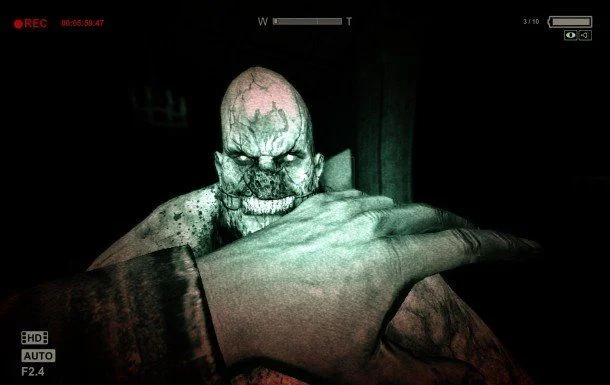
As journalist Miles Upshur explores Mount Massive Asylum in Outlast, he comes across the disturbing scene. Morin says the team wanted players to feel that anything could happen, a principle that helps explain the series’ unpredictable shocks but doesn’t settle whether every shock belongs. Lead writer J.T. Petty then gave the inmate a line that shifted the moment’s focus back onto the player: “You like to watch? You’re fucked up!”
That accusation complicates the scene. The player chooses whether to watch, so the inmate’s words turn the discomfort outward and make the act of looking part of the horror. Morin remembers the sequence as one of the earliest discussions at Red Barrels that became heated over whether a moment belonged in the game. That friction matters: provocation can give a horror scene force, but it can also leave the developers asking whether the force serves the experience or simply tests the audience’s tolerance.
Why The Outlast Trials uses mannequins
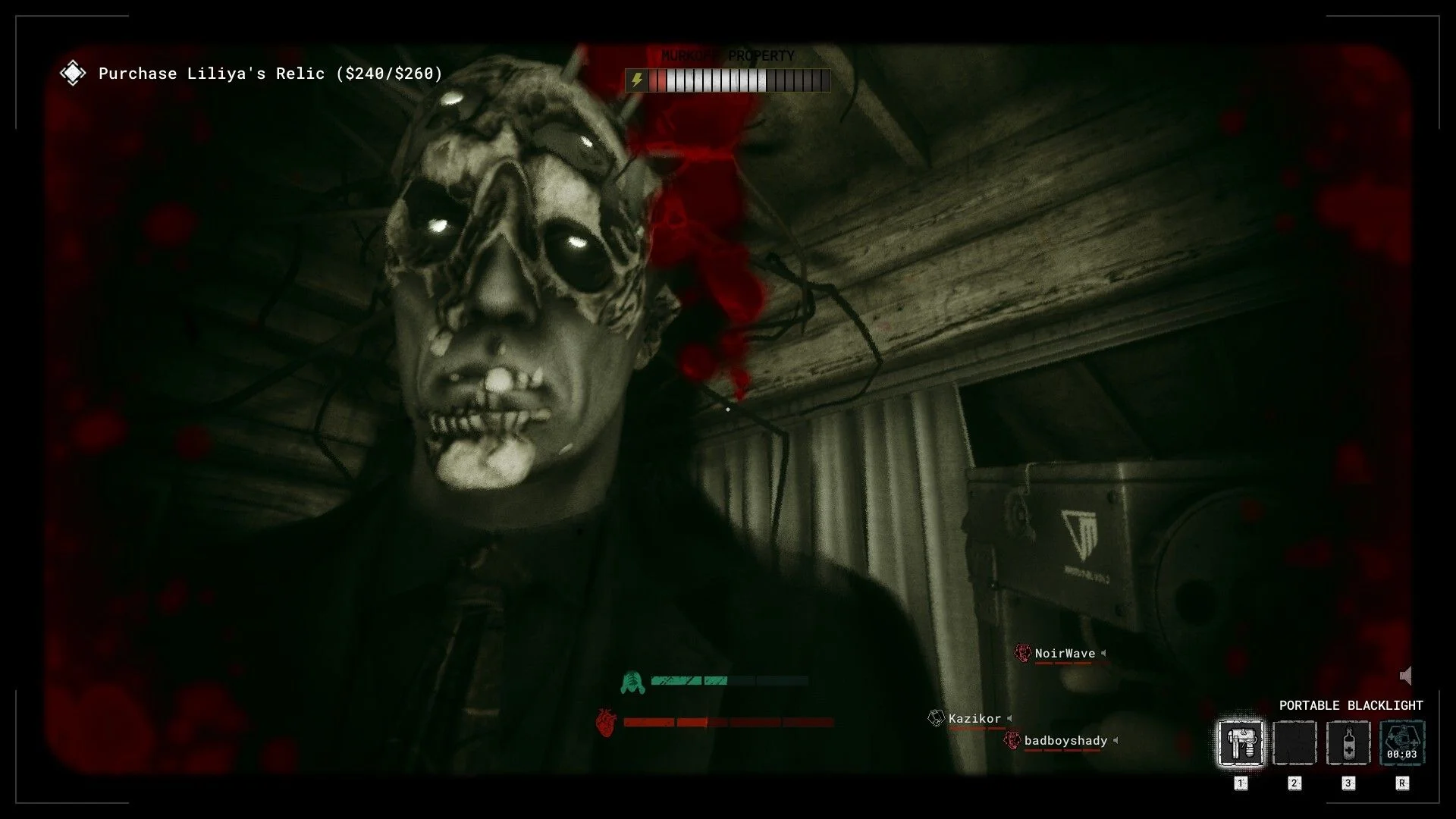
The studio faced a similar boundary question while developing The Outlast Trials. In trials such as “Grind the Bad Apples” and “Punish the Miscreants,” the team had to decide how to depict children. Its choice was to use mannequins instead of animated child characters. That decision keeps the scenarios unsettling while setting a visible limit on how the studio represents the subject.
“At the end of the day it’s a bunch of polygons moving,” Morin says of the technical distinction. “But you know, in the player’s mind, it’s not the same thing.” The point is less about the underlying graphics than what players understand those graphics to represent. For the team, mannequins marked a limit it didn’t want to cross. It’s a practical creative choice, though one that still asks players to read the scene as threatening.
That restraint still leaves room for the series’ other forms of brutality. Trials with names such as “Pervert the Futterman” and “Despoil the Auction” already push players through disturbing imagery and objectives. The contrast makes the mannequin choice more revealing: Red Barrels isn’t describing a general retreat from extreme horror, but a decision about the form that particular content should take. Morin’s account suggests that the studio sees its internal debate as part of shaping that horror, not as a reason to avoid difficult ideas altogether.
Debate as part of the creative process
Morin says the team itself is often the first to react to new concepts. If an idea seems acceptable, the developers may keep pushing until someone’s response signals that it has gone too far. Here’s the thing: that process treats discomfort as useful feedback, but it doesn’t make the answer automatic. A scene can unsettle its creators and still require a judgment about whether it belongs in the game.
Those conversations became more necessary as Red Barrels grew from 20 employees to 30 or 40, many of whom hadn’t worked on Outlast 2 or the original game. People joining a series with an established identity may bring different instincts about what that identity permits. The larger team therefore has to talk through its standards rather than rely on a shared history that every developer has experienced firsthand.
Some concepts begin as juvenile or gratuitous provocations, Morin says, but discussion can turn them into scenes the team considers scary and satisfying. That change depends on what the idea contributes, not just how extreme it sounds at first. Red Barrels jokes that some of its everyday conversations might send people at other studios to HR. For Morin, that candid back and forth is how the developers decide what belongs in Outlast’s particular brand of horror.
What the boundary decisions mean for the series
This is more significant than it looks: Red Barrels’ account points to a distinction between depicting disturbing material and deciding how directly to depict it. Mannequins can preserve a threatening scenario while keeping the studio within a line it has chosen for itself. The earlier scene in the asylum works differently, using the player’s decision to watch as part of its unease. Both examples show how a horror game can shape discomfort through framing as well as through the event on screen.
If you’re working in this space, the useful lesson is that a boundary can be a design decision rather than a blanket ban on difficult subject matter. That said, the studio’s own debate doesn’t guarantee that every player will find a scene effective or acceptable. Its approach leaves room for disagreement, which is fitting for a series built around discomfort—but also makes the reasoning behind each choice part of the work.
And yet. That tension is precisely what gives Morin’s comments weight: the team’s willingness to push an idea is paired with the need to decide when the push stops serving the game.
2026 games: All the upcoming games
Best PC games: Our all-time favorites
Free PC games: Freebie fest
Best FPS games: Finest gunplay
Best RPGs: Grand adventures
Best co-op games: Better together