The Punished turn Monster Train 2’s most obvious liability into a resource: friendly units taking damage. Across 12 wins with the new clan, I found that its best runs aren’t just about surviving self-inflicted pain. They turn each hit into scaling, enemy damage, or both. That gives The Punished a distinct strategic identity—and, in my experience, more than one route to a victory.
The final faction planned for Monster Train 2 arrives November 10 as paid DLC. Its cards bring new ways to hurt your own units, alongside tools that reward you for doing so. The clan also pairs naturally with allies that can either absorb damage or help dish it out, making its central mechanic adaptable across different runs.
The Monolith makes cards into permanent growth
The Punished’s centerpiece is the Monolith, a purple crystal that lets you sacrifice cards from your hand. Each sacrifice adds a point of Devotion; Devotion raises the Monolith’s level over the course of a run, and each level gives deployed units one Zeal. Zeal adds one attack and one maximum health to each unit when it enters play. There’s no level cap, and my strongest runs reached level 10 or 11.
That growth is useful, but the Monolith’s ability to clear awkward cards is just as appealing. Curses can be sacrificed, so a card that would otherwise burden your hand can instead help advance your scaling. The choice becomes more interesting when a hand contains several cards you’d rather get rid of: sacrificing one at a time turns the process into a small gamble over which card disappears.
There’s another interaction to keep in mind: sacrificing a card triggers Offering, the effect that plays a card when it’s discarded. That creates opportunities to turn a cost into an effect, depending on what’s in hand. The basic loop is easy to grasp, but it gives each draw a little more weight.
Zeal doesn’t break the game by itself. Its value is that it raises units’ attack and health ceilings, and that extra health can feed into other effects. Zealot’s Halo, for example, grants attack based on how much health its wearer has lost. The result is a clan mechanic that supports several plans without dictating one build.
Archus turns friendly hits into floor-wide pressure
Archus, The Punished’s starter champion, is the more immediately accessible of the two champions. He scales damage based on lost health and can also reduce enemy attack. Every version of his upgrade path grants Flight, while his strongest path lets him place a Darkshard in the lane he flies into.
Each Darkshard offers a different payoff. Blinding Darkshard reduces enemy attack by three, scaling to seven at its maximum level. Looming Darkshard applies Bloodshed, which gives all friendly units on the floor one attack whenever a friendly unit takes damage; that bonus scales to three. Shattering Darkshard can be sacrificed to deal 40 damage, rising to 300 at maximum level.
Bloodshed is the standout when a floor has units that benefit from repeated attack boosts. Friendly damage spells can trigger it, and Archus can place Darkshards in multiple lanes, with a two-turn cooldown on his Flight ability. That combination can turn a few small hits into a substantial boost for an entire floor. I wouldn’t be surprised if that interaction draws attention, but the appeal is clear: damage becomes a way to accelerate your whole formation.
Zariel rewards careful damage planning
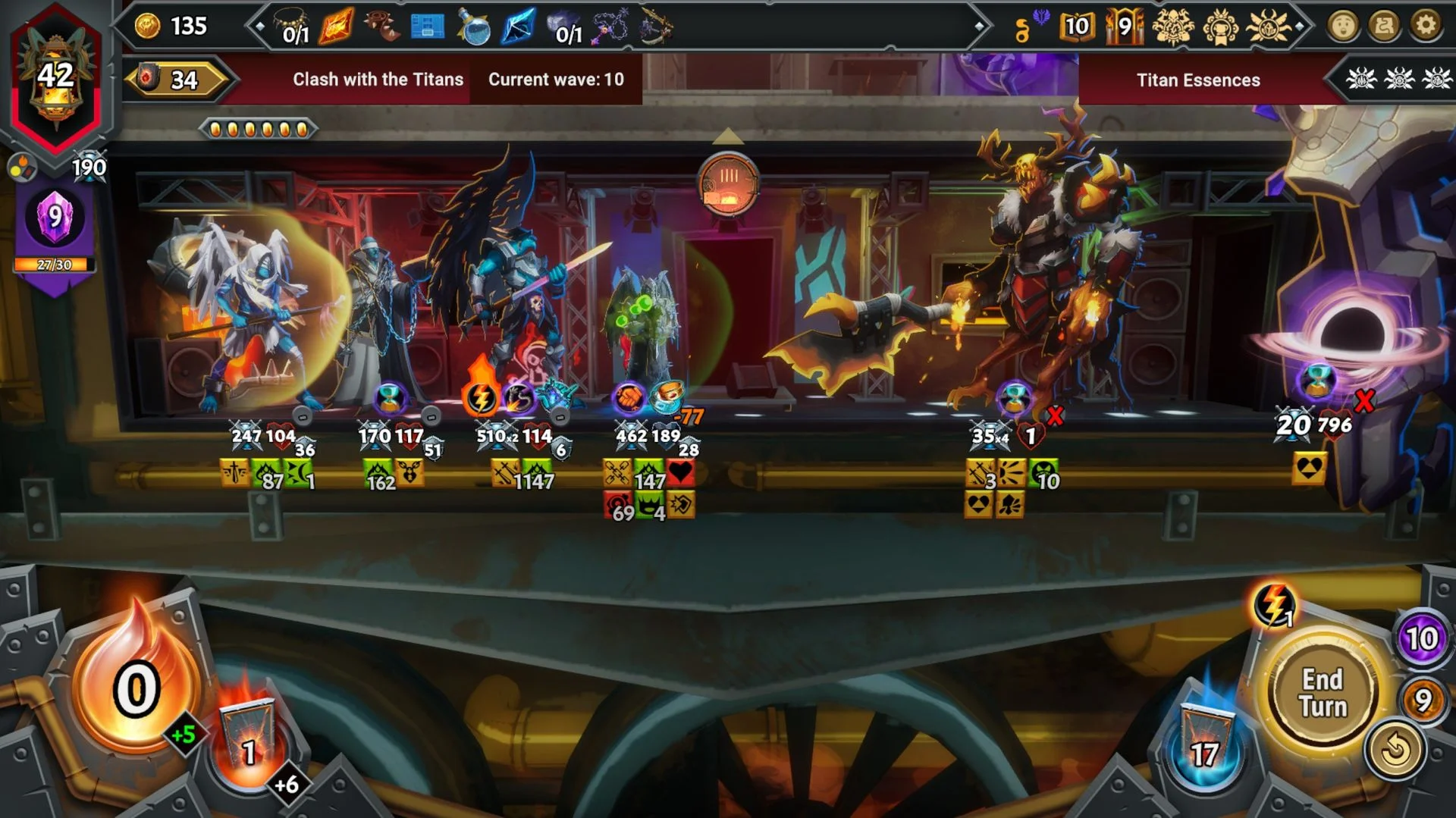
Zariel asks for more setup. The fallen angel has no base attack, and her three upgrade paths all make incoming damage matter. Matriarch of Chains applies one stack of Chained to enemies at the start of each turn. Chained makes enemy units take half the damage your units take, giving friendly damage a way to spill over onto the opposing side.
Pain Maiden builds around Pain. Zariel starts with 10 stacks, gains more whenever friendly units take damage, and deals three damage to an enemy for each stack. Devout instead combines Siphon, which grants one Devotion, with Incant, which deals six damage to the front enemy. That damage rises by six for every Monolith level.
Shiny Shoe CEO Mark Cooke pointed to several ways to support Zariel. “A lot of Hellhorned cards like Branding Rite, Dark Deal, and Inferno work really well with Zariel's Pain and Chain paths. Pox is a great spell for consistent friendly damage, because it applies Decay 10 to all units,” he said.
Cooke also described a pairing for Pain Maiden: “The Condemned” has Tenacious, so friendly damage won’t kill it. The unit also amplifies the damage it takes and redirects that damage to an enemy, letting players build Pain while still making progress against opposing units.
When the pieces come together, Zariel can hit hard. In one run, Pain Maiden’s Paintouch dealt 1,000 damage in a turn during the final rounds, and its one-turn cooldown let me repeat the effect. In other attempts, I couldn’t assemble damage-producing units quickly enough, and the run fell apart. Zariel’s ceiling is high, but reaching it depends on drafting and setup.
Strong units help cover the gaps
The Punished can struggle to produce immediate damage, even though several units have strong base stats. Reaper of Suffering, the clan’s only sweeper, starts with 60 attack but begins Suppressed, which prevents her from attacking. That state lasts four turns by default; taking damage shortens the cooldown. When it ends, she heals to full health and gains Flight.
Other units offer more direct routes to damage. Forsaken Berserker gains one Multistrike for every two Monolith levels. Scarred Justicar gains 15 attack whenever a friendly spell or ability hits him. A starter spell that deals two damage can trigger that bonus, and further hits can add another 15 attack each. Give him Multistrike and Sineater—a three-cost equipment that deals eight damage to its wearer and lets it attack immediately—and he can become a major threat once the setup is in place.
Penitent Sentinel may be the clan’s most dependable unit. This uncommon tank can’t be healed, but it gains one maximum health each time it retaliates. That permanent growth makes it a reliable frontliner if you draft it early. In one run, I took a trial that gave enemies Multistrike simply to make them attack the Sentinel more often. It finished near 300 health; a Titanite upgrade effectively doubled that total.
The superstar of the roster might be Penitent Sentinel, an uncommon tank that becomes MT2's most durable frontliner.
Lasher offers a stranger form of support. It’s a backline unit that deals one damage to friendly units positioned in front of it. That can help trigger effects that respond to friendly damage, though it makes Damage Shield a poor fit for the same floor. The clan’s severe visual style has room for an oddball like this, even if most of the roster keeps its solemn tone.
An improvised Zariel run shows the clan’s range
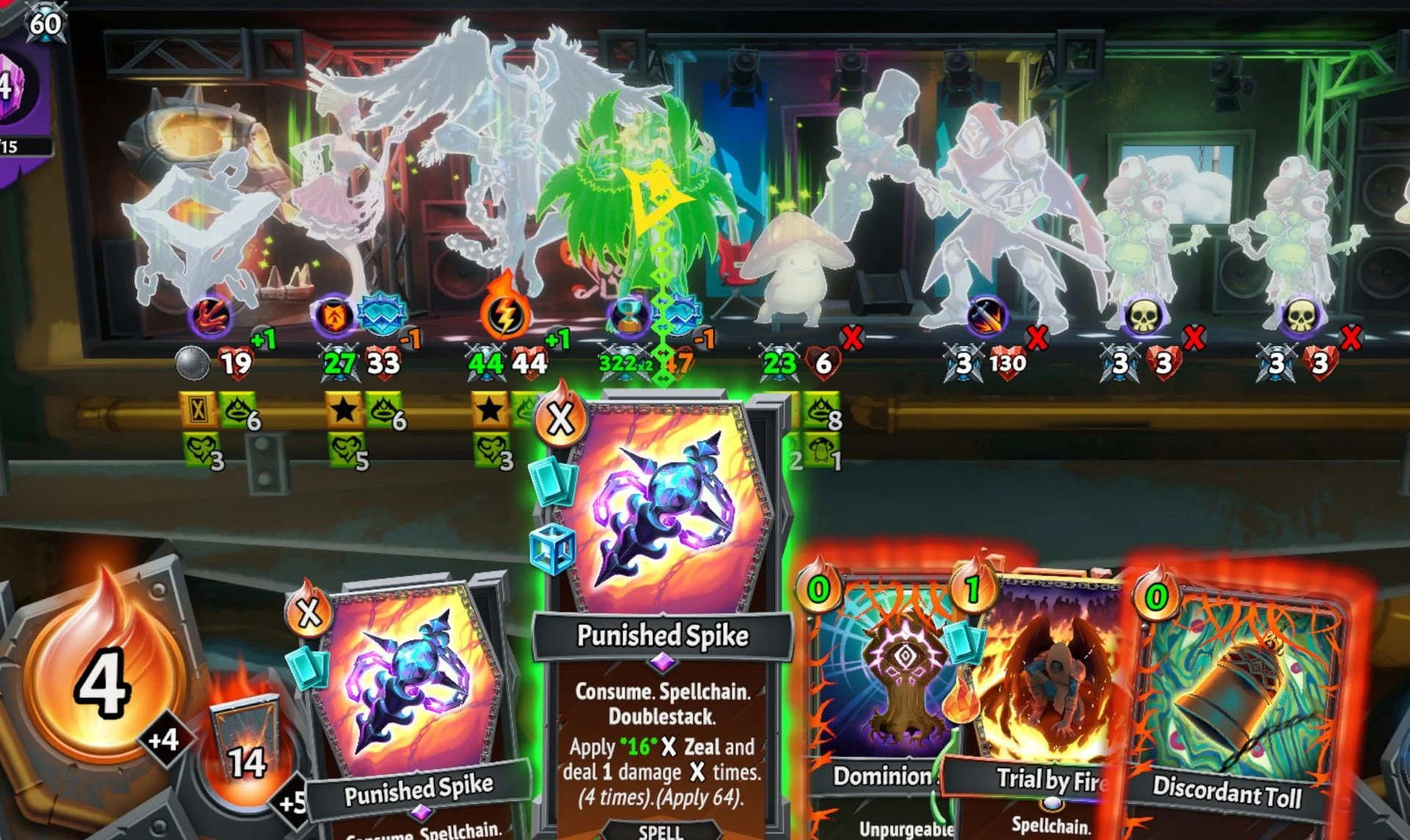
My strangest win came with Zariel and Underlegion as the secondary clan, against Savagery. The build had no conventional tank and no sweep, and its damage plan emerged as I drafted rather than from a clear strategy. I gave Chainbearer Endless through Remnant Pact and equipped it with Largestone and Smidgestone, bringing it to a workable 80 health.
Zariel dealt 96 damage to the front enemy with Incant. Her Chained effect, combined with the Dungeon Mooring artifact, made enemies on the first floor take as much damage as my units did. I didn’t have a huge self-damage spell to exploit the effect directly. Instead, incoming hits on my frontline sometimes killed the enemy backline sweepers that had attacked it.
Manifold Mirror and Mushy Room helped sap each floor. I used spells to damage Scarred Justicar, which had Multistrike, raising its attack to roughly 150–260 per hit. Punished Spike, with a remove-consume enchantment, often gave the Justicar 56 Zeal. Shackles of Spite doubled its damage when its health fell to 50% or lower; on a few turns, that pushed its attack to around 425 per hit, though I couldn’t make the setup consistent.
Two one-cost Rots added damage against bosses, while Zariel supplied most of the run’s 11 Monolith levels. The build’s pieces weren’t especially polished, and I expected it to lose. It beat Savagery, then the Titans.
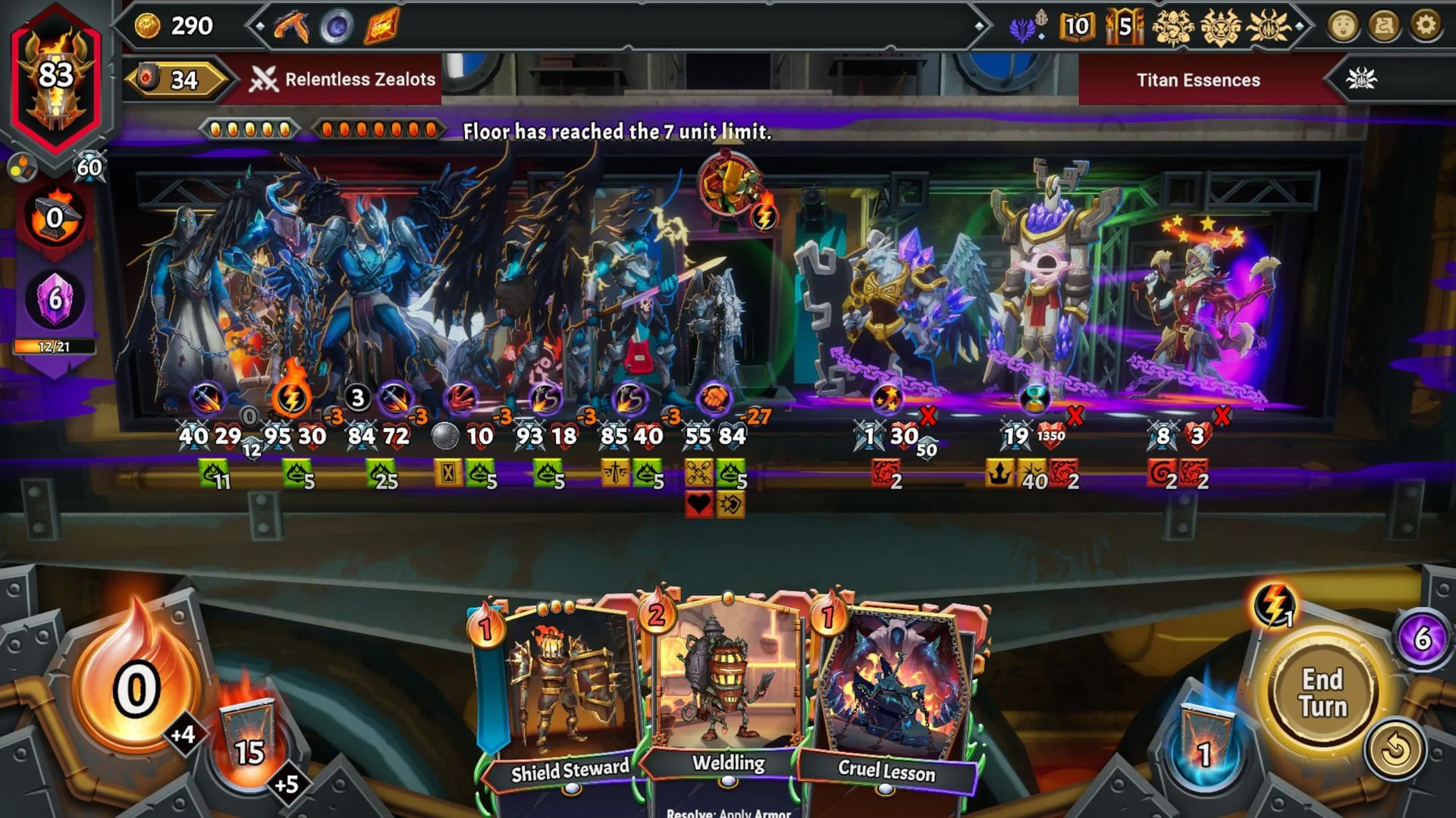
After 500 hours in Monster Train 2, the most satisfying thing about The Punished is how often it changes what counts as a useful hit. The clan has recognizable weaknesses—especially its need to build toward burst damage—but its champions and units let you pursue several different answers. Shiny Shoe CEO Mark Cooke said The Punished is the last DLC currently planned for Monster Train 2, while adding that the studio hopes to make more games in the series. For now, this final faction gives experienced players a fresh reason to rethink how they build a winning floor.