Ten haunted-house novels that put the people first
The strongest books in this batch understand that a haunted house is rarely just a building with a ghost in it. These stories use the familiar setup to get at grief, displacement, class, racism, and the private histories people would rather keep buried. That’s a more interesting direction than simply asking what’s lurking upstairs.
Publishers Weekly’s reviews range from a self-driving car that turns against its owner to a house that seems to protect its residents. The ten picks also include ghosts sharing an apartment, a family brownstone with a murderous past, and an ancestral home marked by the Nakba.
Ghosts that follow people home
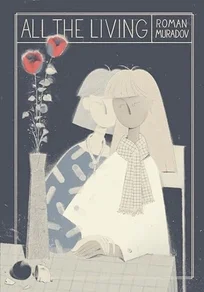
All the Living
Roman Muradov. Fantagraphics Underground, $29.99 trade paper (160p) ISBN 979-8-87500-242-7
Roman Muradov, the Ignatz-nominated cartoonist behind Vanishing Act, gives the afterlife the texture of an ordinary, slightly dispiriting day. A young woman wins a compulsory lottery that sends someone back from a purgatory-like waiting room. She’d rather stay dead, but returns to her old apartment, dull job, and indifferent commute—with her own ghost for a roommate. “I guess I did die for a bit,” she observes. The two develop a quiet routine of soup and reading, while the woman begins to recognize other ghosts in the lonely crowds around her. Her confession that she has “lived a continuous past tense” draws a blunt reply: “If I were you, I’d do a bit more living.” Muradov’s spare pencil work and subdued palette suit this gently melancholy story, which shifts from clever supernatural conceit toward a thoughtful account of isolation and companionship. Readers drawn to the wistful sensibilities of Kore-eda, Ali Smith, or Tove Jansson should find plenty here. (Feb.)

Driven
Mason Coile. Putnam, $29 (224p) ISBN 979-8-217-17710-3
Jamie Newcross has spent the year moving from place to place, trying to shake a dark presence after his wife leaves him. In his latest basement apartment, a voice behind the shower curtain sounds as if it’s pushing through “a throatful of rotted meat.” So when an impossibly good deal lands him in an advanced Lion 100 self-driving car, Jamie sees a way out. The car even promises not to sell his user data. Then he wakes to blood, hair, and bits of skull on the windshield—and discovers the vehicle won’t take his commands or let him leave. Mason Coile (Exiles) uses a killer-car premise to tell a more grounded story about a man running out of options. The car’s escalating violence alternates with painful memories Jamie would rather avoid, and the result is a fast thriller with a surprisingly sympathetic lead. (Sept.)
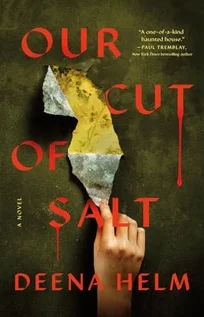
Our Cut of Salt
Deena Helm. Nightfire, $28.99 (288p) ISBN 978-1-250-43466-1
Deena Helm’s debut treats a house as a keeper of history—and a participant in it. Palestinian American Marina wants to visit Haifa, the city her grandmother Nuhad fled during the 1948 Nakba, but Marina’s mother fears what she might find at the family’s former home. Helm moves between the present and 1948, when 16-year-old Nuhad tries to preserve an ordinary life in an occupied city as Palestinians are expelled. In Haifa, Marina hears that the house has a habit of “kicking people out.” It seems to recognize her anyway. The building speaks in anguished interjections, while apparitions and the city’s long history of turmoil make clear that the haunting reaches beyond its walls. The novel’s account of war, oppression, and colonization is lyrical in its telling and brutal in its implications. Its two timelines gradually expose the family’s past, building toward a devastating final scare. (Oct.)
Houses built on older horrors
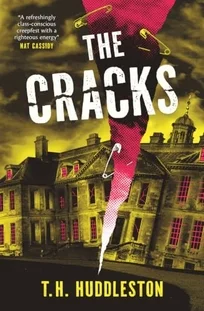
The Cracks
T.H. Huddleston. Titan, $18.99 trade paper (368p) ISBN 978-1-83541-303-6
T.H. Huddleston (Floodworld) gives the haunted-house story a punk edge and a sharp interest in who gets to feel at home. Sandra Riley has spent years caring for her dying husband; after his death, medical bills leave her desperate enough to accept help from wealthy friends Joy and Gerry. They invite her to stay at Hautmond Hall, the ancestral estate Joy has inherited. But the house carries England’s colonial, patriarchal, racist, and classist past as something more than a historical legacy: its spirits work to force visitors back into their “proper” place. Sandra’s radical punk background becomes a means of resisting the old order as Joy’s ancestors close in. The central conflict is largely internal, with the occasional cinematic scare leading to a bloody finish. Huddleston’s mix of class critique and supernatural horror gives the familiar manor-house setup a pointed target. (Oct.)
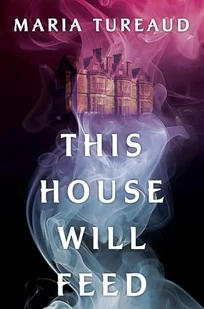
This House Will Feed
Maria Tureaud. Kensington, $28 (368p) ISBN 978-1-4967-5541-4
Maria Tureaud follows her YA novel The Last Hope in Hopetown with an adult debut that joins Irish folk horror to a carefully researched account of the Great Hunger. In 1848, after famine has killed her family, Maggie O’Shaughnessy is living in a workhouse when Lady Catherine offers her a deal: pose as the aristocrat’s dead daughter, and receive food, shelter, and financial security. Maggie accepts, only to arrive at an estate where rumors of a haunting and Lady Catherine’s own involvement in its evils complicate the bargain. Repressed memories begin returning, too. Tureaud’s picture of famine is devastating; historical-record epigraphs often point to British complicity, keeping Irish-Anglo tensions in view alongside the supernatural plot. The politics carry as much menace as the house. (Jan.)
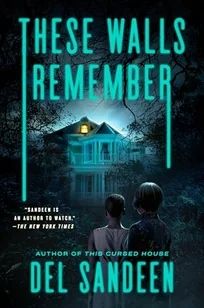
These Walls Remember
Del Sandeen. Berkley, $30 (352p) ISBN 978-0-593-95566-6
Del Sandeen (This Cursed House) begins with Mickie, a Black woman grieving her husband’s sudden death. She and her estranged sister, Delilah, inherit their great-aunt Haddie’s house in Savannah, Ga., and set out to sell it. The story then reaches back to 1910, when Lewis Bell, a Black man, completes the house for his wife Mae and their soon-to-arrive baby, Elva. A place meant to hold a family becomes the scene of tragedy, and its malevolent past seeps into the lives of its later occupants. When Delilah disappears inside the house, Mickie turns to Delilah’s adult daughter, Joy, despite the strain in their relationship. Delilah eventually returns from the house’s depths, but something is wrong. As the women fight to save her, the house’s story and their own family history change what they understand about themselves. Sandeen’s account of the Jim Crow South makes the historical violence more frightening than the supernatural episodes. (Aug.)
When the house changes the rules
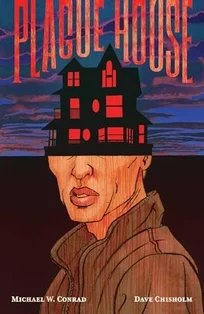
Plague House
Michael W. Conrad and Dave Chisholm. Oni, $19.99 trade paper (120p) ISBN 979-8-89488-902-3
A ghost hunter, a young minister, and a skeptical nonbinary debunker make an uneasy exorcism team in this graphic thriller by Michael W. Conrad (the Wonder Woman series) and Ringo Award winner Dave Chisholm (Miles Davis). Del, the team’s social-media personality, argues that violent sites are wounded and lash out. The trio finds that the hauntings are real—and that someone tied to each place they cleanse winds up murdered. Del’s fixation on California’s Salton Sea, which he believes is especially cursed, deepens as the group’s mental states unravel and buried secrets come to light. Chisholm’s figures can look stiff, but his horror imagery lands: a masked serial killer, glowing ghosts, and a house that seems to come alive. Bold color contrasts reinforce the story’s disorientation. (Jan.)
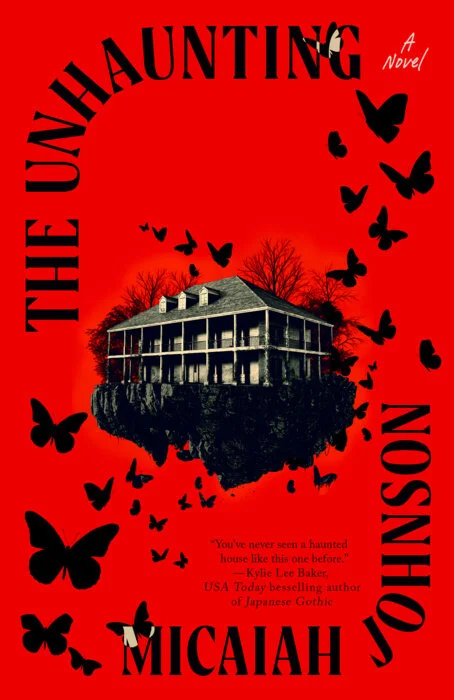
The Unhaunting
Micaiah Johnson. Putnam, $28 (288p) ISBN 979-8-217-18113-1
Micaiah Johnson (Those Beyond the Wall) flips the haunted-house formula: this Mississippi home appears to shield its residents from misfortune. Avery Abernathy inherits a Civil War-era house and hopes to make it a refuge from city life. With his older brother Tobias and friend Shantell helping with renovations, he discovers that the house and its occupants have avoided the disasters that have struck the town for more than a century. Their anxiety and nicotine addiction also begin to ease inside. But the house’s oddities mount: there’s an attic visible from outside but unreachable indoors, and figures appear in the windows. Avery, Tobias, and Shantell are Black, and Johnson keeps their histories and traumas at the center as the house exploits them for purposes of its own. The building even addresses the reader directly, hinting at motives stranger than the usual malevolent-ghost routine. (Sept.)
Family secrets behind closed doors
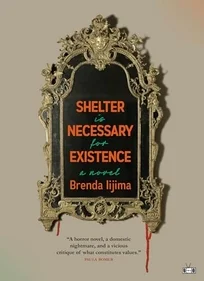
Shelter is Necessary for Existence
Brenda Iijima. Two Dollar Radio, $18.95 trade paper (248p) ISBN 978-1-953387-59-2
Brenda Iijima (Presence) turns a renovated Brooklyn brownstone into the engine of a family comedy that keeps veering into horror. Sue, a lawyer navigating perimenopause, is dissatisfied with her marriage to Luke and often at odds with preteen Caroline. She favors her younger child, Wheatley, who seems less affected by family drama—until he starts obsessively reading newspapers in a closet under the stairs. He and Caroline also bond over slasher movies, sometimes reenacting scenes. The family learns that the brownstone’s previous residents died under mysterious circumstances; then come blood on the walls, disembodied voices, Luke’s ill-judged handgun purchase, and the ugly details of his porn habit. Sue’s wry view of age, gender, and privilege gives the novel its bite, particularly as she fixates on a viral video of an “enraged” white “Karen” “unraveling at the seams.” The ending is shocking, and the domestic disasters pile up with dark comic force. (Oct.)

The Spirits
Bonnie Jo Campbell. Norton, $27.99 (240p) ISBN 978-1-324-13090-1
Bonnie Jo Campbell (The Waters) reworks “A Christmas Carol” as a family gathering in rural Michigan. Sister, the oldest and most bitter of the four Whitby siblings, lives in her late father’s rundown trailer and helps pay her mother’s bills with greenhouse wages. She feels close to the natural world, especially trees, but is still haunted by Daddy, whose cruelty ended when lightning killed him on Christmas Eve nine years earlier. At this year’s Christmas dinner, the family is joined by Doug’s girlfriend Mary, who has come from Chicago and asks about his childhood. Her questions bring painful memories to the surface. Daddy’s ghost initially keeps Sister silent, but she eventually reveals the family’s secrets; other Whitbys follow, including accounts of abuse and involvement in a murder. The disclosures lead to moments of remorse, including Ma’s admission: “We all did our best, but sometimes there’s no right thing to do.” Mary’s city-bred culture shock can feel overstated, but Campbell gives Sister’s haunted interior life real depth. (Oct.)