BookTok’s real publishing power
The publishing industry got a welcome Q4 signal last week: the sixth *A Court of Thorns and Roses* novel, *A Court of Splintered Harmony*, sold 1.7 million copies on release day . That’s more than 600% above the first-day sales for 2021’s fifth book, *A Court of Silver Flames*. The obvious read is that BookTok can move books at enormous scale. The more immediate point for publishers is simpler: a launch this big should help lift fourth-quarter sales. One blockbuster doesn’t explain the whole market, but it gives the industry a concrete reason to breathe easier.Publishing’s private lives make good TV
Television is turning its attention to the people and power struggles behind the books. Some of these shows adapt novels; others use publishing as their setting. Either way, the industry’s inner workings are proving useful material for drama.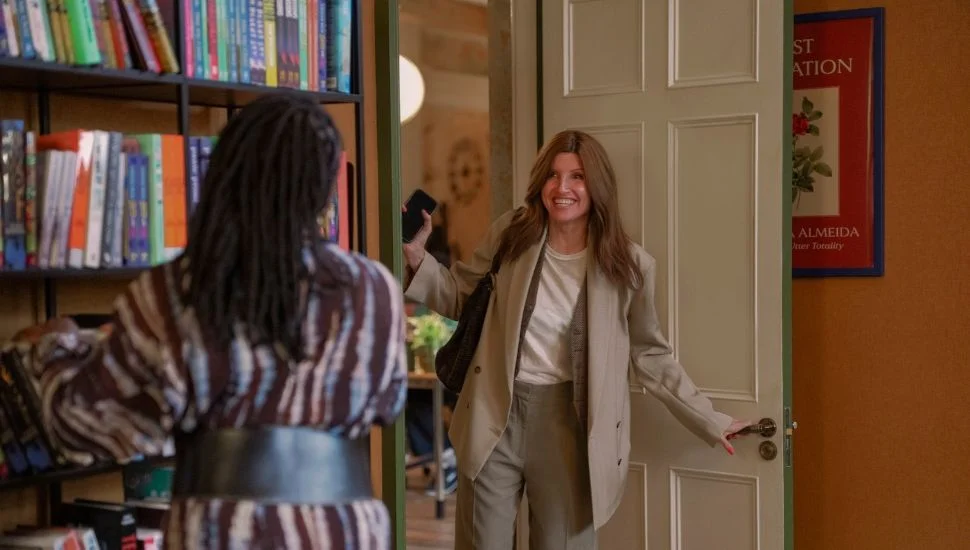 *Image courtesy of Warner Bros. Discovery*
Tahmima Anam’s *Good Books* has been optioned for a series adaptation, even though the novel won’t arrive in bookstores until 2028. It’s been pitched as *The Devil Wears Prada* meets *Yellowface*. Anam will write the adaptation with Alison Brown, whose credits include *Younger* and *Emily in Paris*.
Sharon Horgan’s romantic dramedy *Youth* has just wrapped its HBO run, with the finale airing November 1. Horgan plays a literary agent contending with publishing complications, midlife, and an empty nest. *Publishers Weekly* spoke with her about taking on the role; the show has also drawn praise for its portrayal of dating in midlife.
The earlier examples show the commercial uncertainty that comes with this territory. Hulu’s comedic thriller *The Other Black Girl*, adapted from Zakiya Dalila Harris’s novel, earned strong reviews but lasted only one season. It follows a Black editor whose work and personal life are unsettled by the unpredictable arrival of another Black employee at her publishing company.
*Younger* had a longer life: the series, based on Pamela Redmond Satran’s novel, ran for seven seasons and ended in 2021. Its premise—a single mother in her forties posing as a woman in her twenties to pursue romance and a publishing-assistant job—gave the industry setting a broad comedic hook.
 Shows such as *The Bold Type* helped make magazine publishing and journalism familiar TV territory. Now books are getting their turn. That may reflect publishing’s lasting cultural pull, though it’s too early to say whether the trend will produce more durable hits than *The Other Black Girl*.
A Best Books list built for discovery
After nearly two decades in the book business, I’ve come to favor *Publishers Weekly*’s annual Best Books of the Year list. Its Top 10 tends to make room for less obvious choices, which gives the list a job beyond confirming what’s already popular: it can point readers toward books they might otherwise miss. The genre selections are similarly flexible. *PW* doesn’t force every category into the same number of slots; this year’s lists include 12 mystery and thriller titles, eight science fiction and fantasy books, six romances, and 25 nonfiction picks. That range makes room for each category to take the space it needs. No year-end list catches everything, of course. Debating the omissions is part of the pleasure—and the podcast conversation is a good place to hear more about the *PW* picks and broader books-of-the-year trends: Book Riot Podcast.
Classic books, dressed for gifting
Gift season brings a familiar problem: readers may already own the book you choose. A handsome new edition offers a practical workaround, especially when the recipient already loves the story. Toni Morrison’s *Beloved* is part of the Vintage Quarterbound Classics series, which offers striking designs at prices close to an average hardcover. Any title in the collection could work as a gift. For F. Scott Fitzgerald’s *The Great Gatsby*, Chiltern Classics leans into the novel’s world with an Art Deco-inspired cover and gilt edges. The series uses a repeating design across titles, so several editions look considered together on a shelf. Joseph Sheridan Le Fanu’s *Carmilla* is the pricier choice here. Beehive Books’ illuminated edition adds illustrations by Rosemary Valero-O’Connell to the classic vampire story, giving the gift a visual dimension beyond a new cover.Library cards are becoming local pop culture
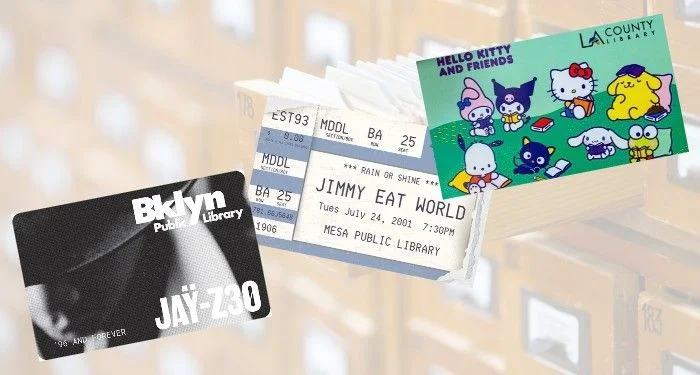
The most interesting thing about this year’s special edition library cards is how many different communities they speak to. They’re part keepsake, part invitation: a familiar artist or team gives people a reason to sign up, while the library gets to put local culture in their hands.
Award-winning singer, composer, and instrumentalist Laufey chaired National Library Card Signup Month this year. She and her Laufey Book Club helped bring special edition cards to libraries around the country, including Los Angeles County, Kern County, Broward County, and Des Plaines Library. The idea has plenty of precedent, and Laufey’s cards were one of several notable collaborations this year.
Stars, stories, and hometown ties
- Mesa Public Library in Arizona offered Jimmy Eat World cards this fall.
- Burbank Public Library in California tapped childhood nostalgia with three different Nickelodeon Television cards.
- Los Angeles County Libraries’ Hello Kitty and Friends cards proved popular enough to sell through their initial run. The library restocked them.
- Brooklyn Public Library released two Jay-Z cards marking major anniversaries for Reasonable Doubt and The Blueprint. It was the library’s second round of Jay-Z cards.
- Richland County Libraries in South Carolina offered Nimona cards earlier this spring, featuring original art by N.D. Stevenson, who grew up in the region.
- San Francisco Public Library partnered with the Golden State Valkyries on cards celebrating the women’s professional basketball team.
The strongest collaborations often connect a big name to a specific place or history. Saint Paul Public Library worked with local artist Kao Lee Thao on a card honoring the 50th anniversary of Southeast Asian resettlement in Saint Paul. That tribute carries particular weight amid federal attacks on those communities in the city and state.
Other libraries have used cards to mark shared cultural milestones. In 2023, New York Public Library and Queens Public Library celebrated the 50th anniversary of hip hop. Carnegie Libraries of Pittsburgh teamed up with the Penguins for a hockey-themed card in 2024.
And a library doesn’t always need an outside partner. Placentia Public Library in California created a Taylor Swift-themed card in 2024, drawing on the musician’s popularity and her Eras Tour.
These cards can make joining a library feel personal, while giving local artists, public figures, and community history a place in everyday life. The real test, of course, is whether a striking design brings people through the door and gets them using the library. —KJ
Three novels that make readers do the work
Interactive fiction doesn’t need buttons or branching menus. These novels make structure itself part of the reading experience—and that’s more than a clever formal trick. How you assemble a story can change what you think it means. Julio Cortázar’s Hopscotch offers two routes: read it straight through, or follow the sequence Cortázar lays out in his introduction and circle through the chapters. The novel evokes smoky jazz sessions in friends’ living rooms and the looping conversations of bohemian intellectuals in 1950s Paris. Each route shifts the story’s emphasis, bringing new layers into view and recasting questions that may have seemed unresolved. Li Zi Shu’s The Age of Goodbyes, translated by YZ Chin, begins on page 513. That number points to Malaysia’s May 13, 1969 race riots, while also placing the reader inside a story already underway. Set in Kuala Lumpur, amid its humidity and shifting dialects, the novel uses metafiction to unsettle memory. You’re piecing together events alongside a narrator who is also a “you,” with two versions of the enigmatic Du Li An complicating any settled account. The structure leaves interpretation in the reader’s hands. Olga Ravn takes the most distant route in The Employees. A spaceship crew encounters strange sensory objects, and their story arrives only through interviews framed as “performance reviews” across 18 months. The accounts jump around; some passages are missing or redacted. From those fragments, readers reconstruct a tale of human and transhuman change—and a dryly absurd view of workplace life. Here’s the common thread: each book asks you to treat reading as an act of assembly. That can be disorienting, but it’s also the point. The form makes uncertainty part of the story.


Also in the newsletter
Michelle Cliff, born November 2, 1946
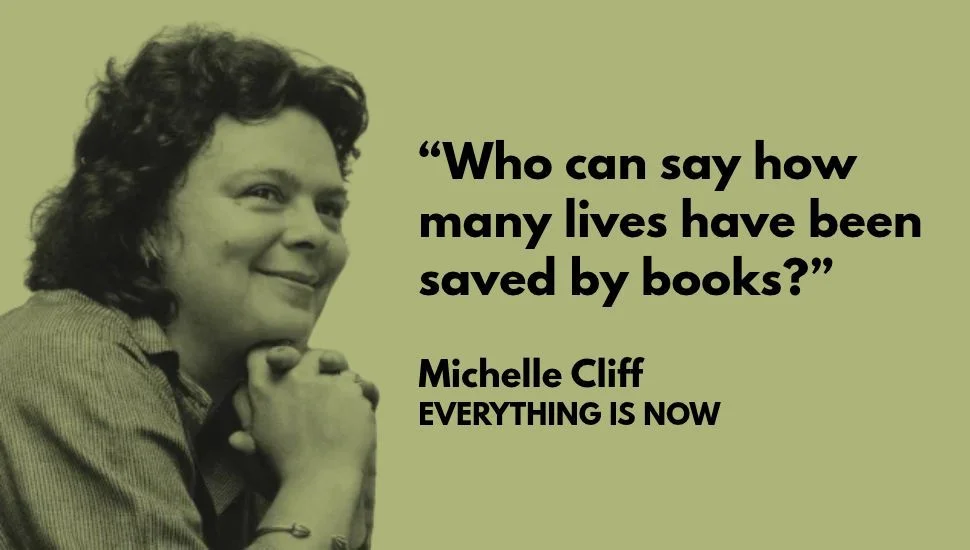
Cliff met her partner, Adrienne Rich, while working as an editor at Norton, where Rich was published.