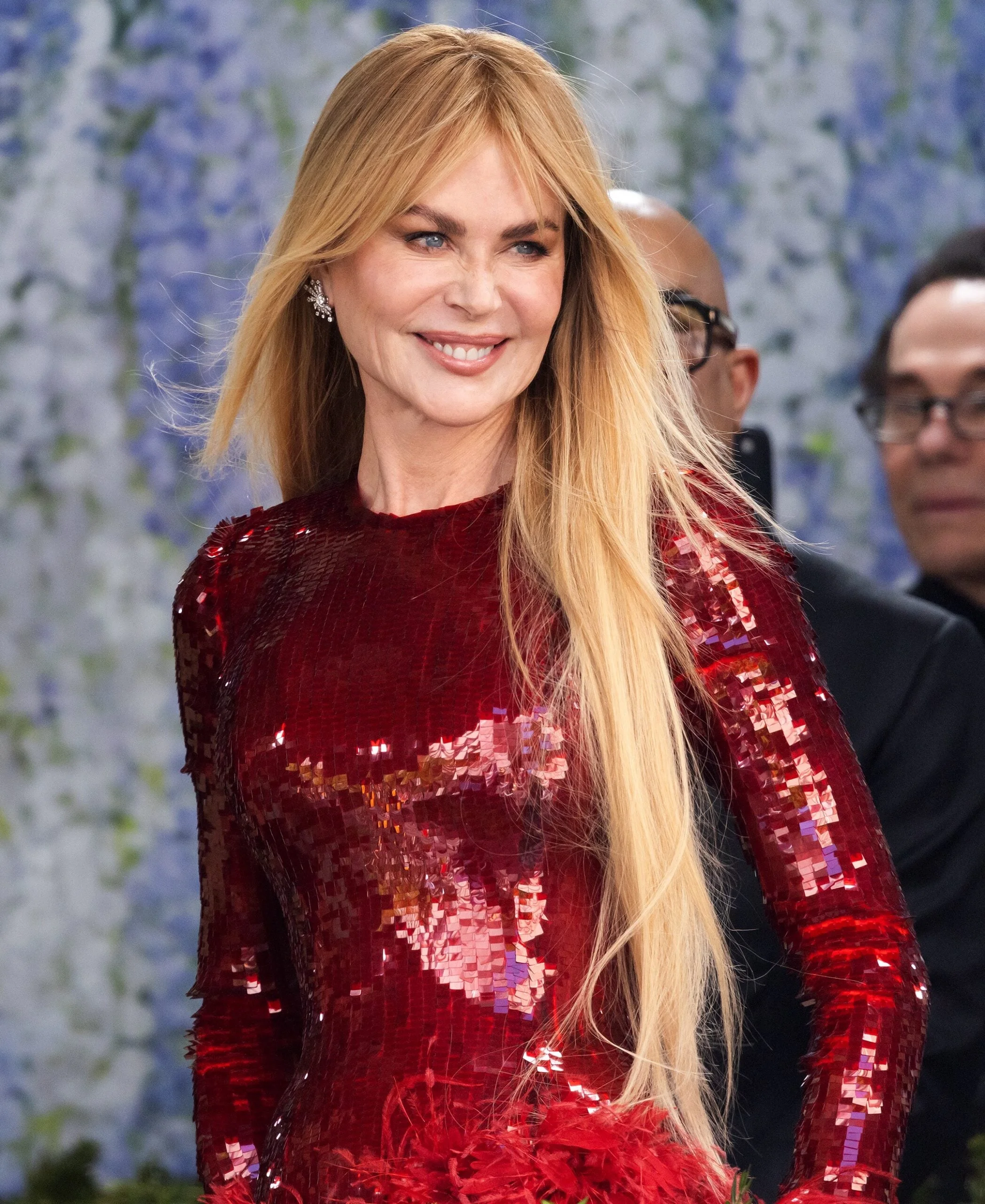
Nicole Kidman says the height she was told could limit her career eventually became part of what drove her. In a new Vogue Australia cover interview, the actress looks back on that criticism alongside her childhood ambitions, her willingness to bend rules and the way she sets priorities as a parent.
The cover shoot puts Kidman in Chanel looks, including a bikini top with low-slung jeans, while the conversation brings in questions from Australian actors and filmmakers Baz Luhrmann, Naomi Watts, Margot Robbie and Zoe Saldaña. The format gives the interview a personal feel: each guest draws out a different side of Kidman's story, from professional setbacks to a childhood wish to appear in a fast-food commercial.
From being told she was too tall to taking the lead
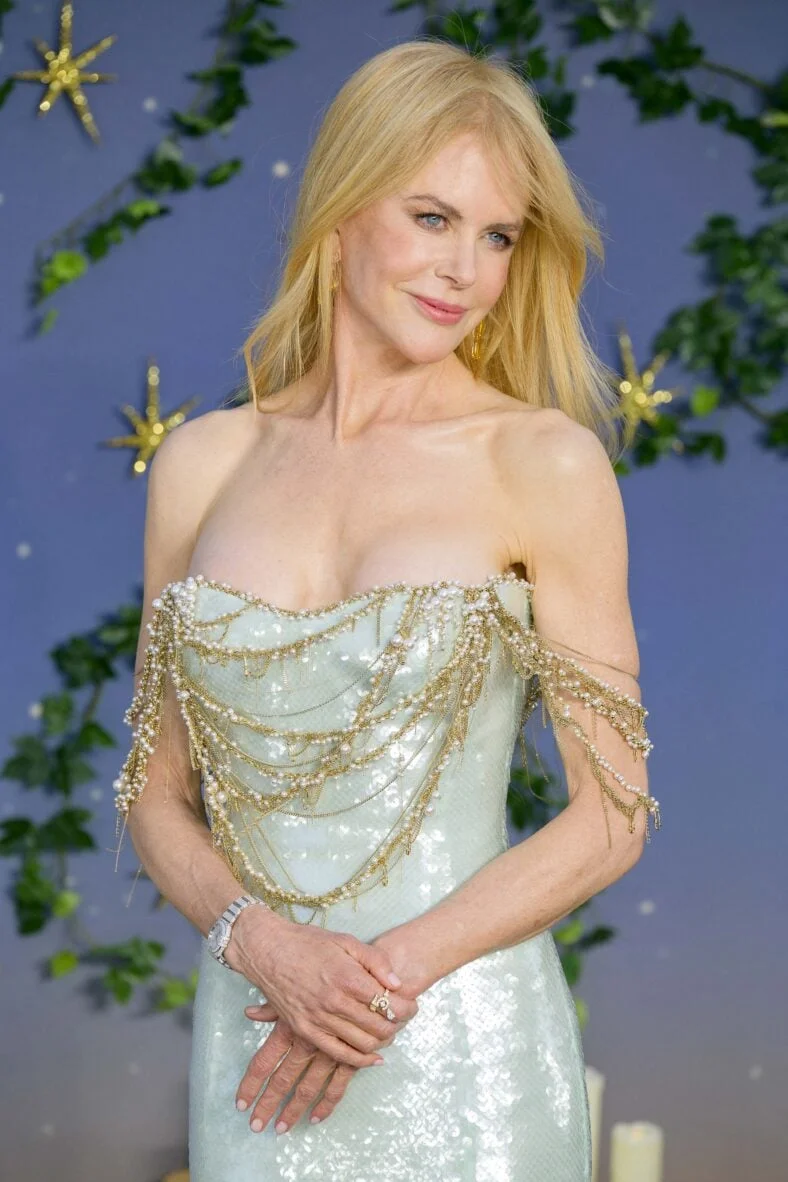
Luhrmann asked Kidman to consider whether a trait she once saw as a disadvantage had helped shape her. She pointed to her height, which made her stand out among classmates and, she recalled, seemed to close off her dream of becoming a ballet dancer.
“My height was an obstacle. I was the tallest in the class, taller than all the boys. I couldn’t fulfill being a ballet dancer because I was too tall,” she said, according to the Daily Mail.
The same judgment followed her into acting. Kidman recalled being warned that her height would be a problem opposite male leads. “Even as an actress, I was told, ‘You’re too tall, because you’re taller than the leading man,'” she said.
That assumption changed once she began securing leading roles. “And then, suddenly, when you are cast first in something, you’re not too tall; everyone has to adjust around you,” she said. The shift mattered: “My whole life, it was just, ‘You’re going to be too tall’. But it gave me my fire.”
Kidman is 5 feet 11 inches tall. The interview frames her experience as a change in who gets to set the terms: what had been presented as a limitation became less consequential when she held the lead role. It’s a sharp account of how a long-running industry expectation can lose its force when the performer’s position changes.
A fashion shoot with a relaxed edge
Photographer Lachlan Bailey shot Kidman in New York for the editorial. One look pairs a Chanel bikini top with low-slung denim, a chunky gold necklace and tousled hair. In another, she wears a Chanel beanie with a strapless monochrome dress, looking directly into the camera.
Christine Centenera, Vogue Australia's editor-in-chief, styled the shoot. It coincides with Chanel bringing its Resort 2027 collection to Australia for the first time. Kidman returned as a global ambassador for the French fashion house last year.
The images foreground the physical confidence of a star with a decades-long career, while the interview offers a more revealing counterpoint: Kidman describes how confidence developed through experience rather than arriving fully formed. The styling may be deliberately bold, but the more telling detail is her account of learning that the old rules didn’t have to define her.
Friends draw out the lighter stories
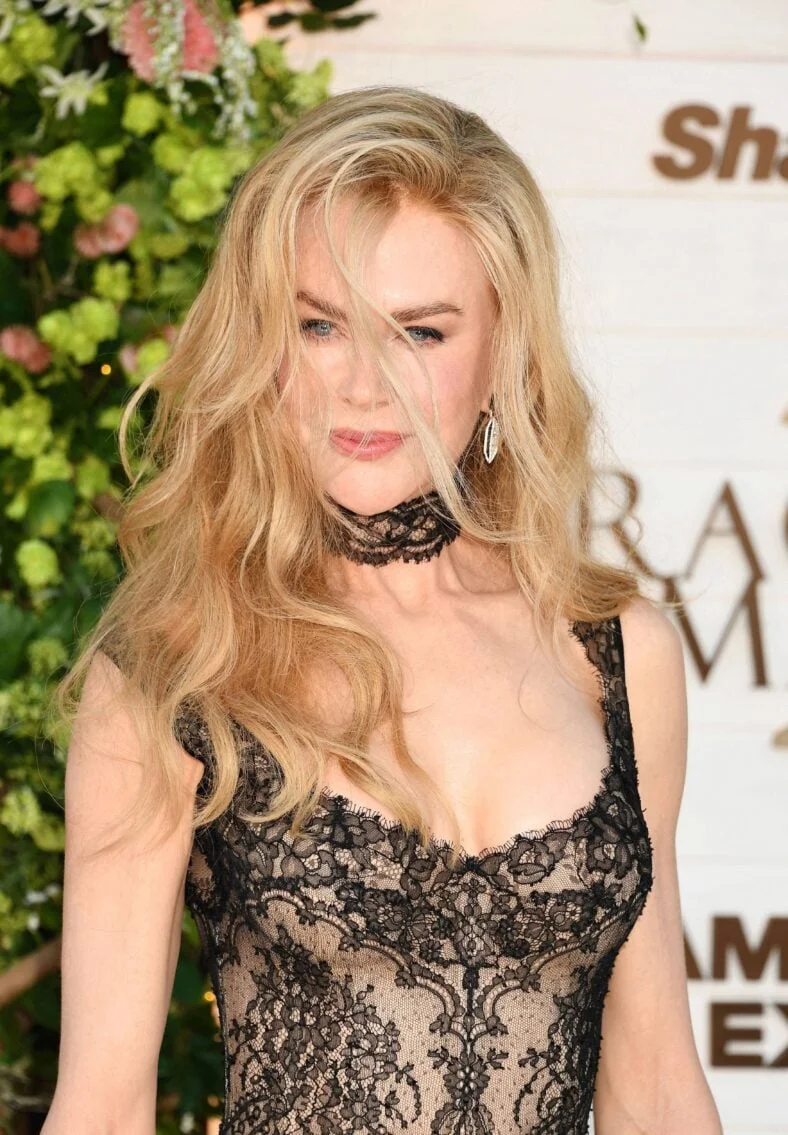
Watts, a longtime friend, asked Kidman which rules she had broken. Kidman declined to give specifics, instead teasing that Watts already knew the stories. “She knows them! I’m not answering. Many. Rule breaker. It takes one to know one!” she replied.
The answer is playful, but it also keeps the interview from becoming a polished career retrospective. Kidman lets the joke stand without turning it into a confession, and her easy exchange with Watts hints at the familiarity between them.
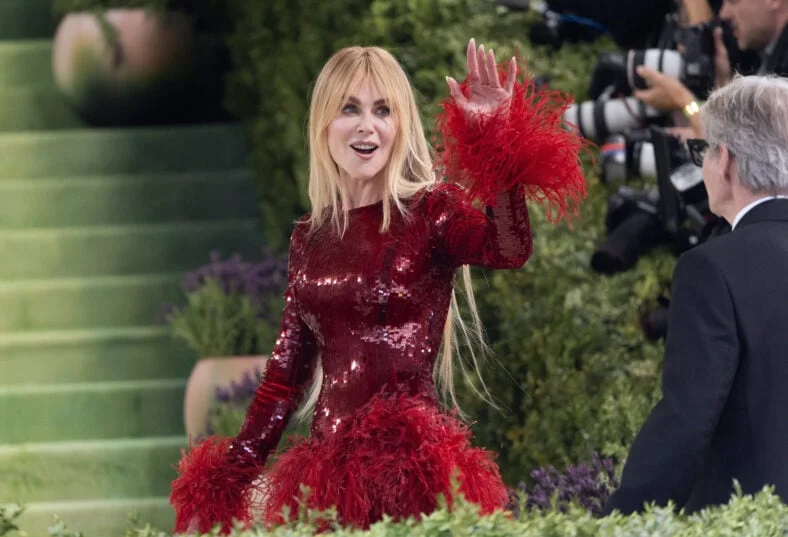
Robbie took the conversation back to Kidman's childhood, asking about an Australian television advertisement she remembered fondly. Kidman's answer was less about the prospect of fame than the food: “Well, I always wanted to be in a McDonald’s commercial. When I was growing up, McDonald’s was it.”
She imagined a particularly appealing part of the job: eating a Quarter Pounder repeatedly on camera. “Forget about acting, I want to be in a McDonald’s commercial, because I want to be able to eat the Quarter Pounder on camera over and over again. I never got cast,” she said.
Parenthood sets the priority
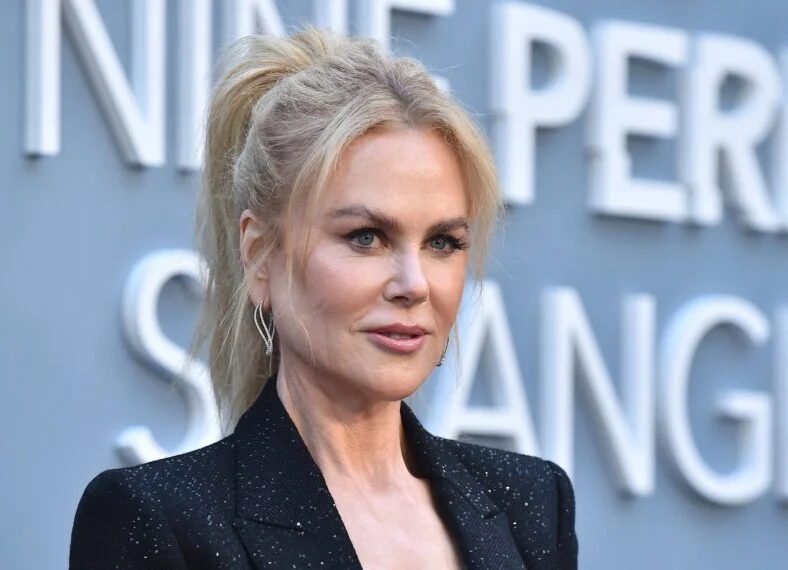
Saldaña asked how Kidman has pursued demanding work while raising a family, and whether women have to accept that they can’t do everything perfectly. Kidman rejected perfection as the standard. “There’s no such thing as perfection in any area. You do your best, and you show up,” she said.
Her practical measure is whether she is present and doing what she can, rather than meeting an impossible ideal. She told Saldaña that her daughters know they can reach her while she is working on a film set, and that the work would take second place if they needed her.
“As I always say to my daughters, if push came to shove, that all goes out the window. There is nothing more important than you. That is so important for a child to hear,” Kidman said. She described that assurance as central to love: “To know that you are absolutely the priority, that you will never, ever not be put first when it’s really needed, for me, that’s love.”
The interview’s strongest thread is the way Kidman describes authority over her own choices: she learned to work with a trait others treated as a problem, and she draws a clear line around what matters most at home. The cover may catch attention through fashion, but her reflections give it a more lasting point: experience can change which expectations deserve to be taken seriously.
===